
.png)
One Year as a Full-Time Indie Author: What Happened When I Treated Writing Like a Real Job


On July 1, 2025, I made a decision most people would probably advise against. To be fair, making questionable life choices in pursuit of happiness has become a bit of a theme for me.
Two years earlier, I had left a decade-plus career in marketing and spent some time bouncing between marketing jobs that never quite fit. I knew exactly what I didn't want to do. Figuring out what I did want to do was considerably harder.
So I went back to something that had always been waiting for me: writing.
This wasn't a new adventure. Back in 2009 and 2010, I wrote two manuscripts and spent time querying agents before life, bills, and common sense pulled me in other directions. But writing never really left. It just sat quietly in the corner, waiting for me to come back.
In 2022, I started writing Without Light. What began as a creative outlet slowly turned into something more. The deeper I got into self-publishing, the more I realized it combined nearly everything I loved: storytelling, design, marketing, business strategy, and the occasional existential crisis.
By July 2025, a few months after publishing my debut novel, I decided to stop treating writing like something I squeezed into evenings and weekends and start treating it like the career I wanted to build.
Not someday. Right then.
Before I go any further, I want to acknowledge something important: this is not a path available to everyone.
I was fortunate enough to be in a position where my family's expenses were relatively low because of a lot of hard work and previous life decisions that worked out in our favor. I didn’t step away from a high-paying career while carrying overwhelming financial obligations.
If you're already in a financially difficult position, I wouldn't recommend making a decision like this lightly.
For me, though, the opportunity presented itself, and I wanted to see what would happen if I gave writing my full attention.
So for the last year, that's exactly what I've done. I did the experiment for you (and I gave it my all).
The First Lesson: Most People Don't View Writing Fiction as Work
One of the strangest parts of becoming a full-time indie author wasn't the workload. No, it was convincing people around me that I actually had a job.
When someone starts a bakery, opens a landscaping company, launches a consulting business, or starts freelancing a service, people immediately understand that they're working. Building something that will someday turn into something… or flop.
When you tell people you're writing books?
Many assume you're pursuing a hobby. Likely because it is a hobby for so many.
For the first few months, I spent a lot of time explaining that I wasn't sitting around waiting for inspiration to strike. That I didn’t have unlimited availability to ‘do whatever I want’.
I was working. Just like I had in every traditional job before it. I created a schedule and I stuck to it. Show up in the morning. Clock out in the evening... and work a lot of overtime!
The difference was that now I was doing it from home. And the pay was significantly worse.
Indie Publishing Is a Business
People often imagine authors spending their days writing stories. Looking out a window while sipping coffee. Magical. Writing is certainly part of every day, if even just a few hundred words, but it's far from the whole job.
Over the last year I've:
Written books
Outlined books
Revised books
Formatted books
Designed covers
Built websites
Managed websites
Created marketing materials
Managed social media
Coordinated ARC teams
Planned events
Ordered inventory
Tracked finances
Handled customer service
Managed advertising
Shipped books
Not to mention, I did all that x2 as I started TWO author brands/platforms.
The writing itself is only one piece of this beast of a machine.
So, YES! Being an indie author is less like having a creative hobby and very much like running a small business. Our product is stories.
The Books

I started writing my debut dystopian novel, Without Light, in 2022.
I published it in May 2025.
Three years (2.5 really). That's how long it took from first draft to publication.
Since deciding to pursue this full-time in July 2025, I've published two additional books and have two more scheduled for release in September 2026. Looking back, one of the most interesting things to see is how much overlap there was between projects.
While one book was being drafted, another was in editing.
While that book was in editing, a third was being marketed.
While marketing was happening, I was outlining the next project.
It has been a constant juggling act of multiple books existing in different stages at the same time. So when you question how on earth do traditionally published authors put out so much—it must be AI, burn them at the stake!—STOP! If you commit to doing this every day and keep yourself immersed in the creative stream, you absolutely will generate the stories.
My writing goal was fairly simple: 2,500 to 5,000 words a day, five days a week. Some weeks I hit that goal. Some weeks I missed it. And occasionally, the characters got particularly loud and I found myself writing 7 days instead of 5. Over the course of this year, I sat down at my desk every weekday whether inspiration showed up or not.
Because of the climate we are in, I will say with my full chest, AI is not in my writing process. The stories, outlines, drafts, revisions, and final manuscripts are entirely my own work. Documented and even overseen by my best friend who can tell you EVERY SINGLE WORD I do not know how to spell. All the plot twists, every bad decision made by a character, the late-night chapter rewrites, and the words that eventually made it onto the page came from me staring at a blinking cursor until the flow started again.
I will say working on multiple books at one time helps keep the creative momentum rolling. When one stalled, I always had another to fall back on or could move my energy to a different task.
I'll include a timeline graphic below because seeing the overlap visually tells the story far better than words ever could. Looking at it now, I'm honestly not sure whether it makes me feel accomplished or slightly concerned for my own well-being.

What a Typical Week Actually Looks Like
One misconception about working for yourself is that you suddenly have endless free time. That has not been my experience.
Over the last year, I've regularly worked 60-plus-hour weeks.
The difference is that those hours are flexible. I could pick up my oldest son from school. My youngest spent much of the year at home with me. We took trips to the park. I stopped to make lunch. I had MANY interruptions... Many, many potty training interruptions.
But flexibility doesn't mean less work. It usually meant I came back and worked later. In the evenings. Saturdays that weren’t already booked with an event. Definitely Sundays too!
The work still needed to get done. The schedule was simply different.
One thing I know about myself, I have always had the discipline it takes to push myself to work. My downfall is knowing when to stop. I'm working on correcting that in 2027 and giving myself room to breath. All that to say, if you are someone who needs a good shove to get going, this may not be for you.
The People Who Make My Books Better
I do a lot myself; covers, marketing, websites, graphics/art, formatting. These are all things I have a tremendous amount of experience in. I spent two decades in marketing and digital advertising. By no means am I a pro at all of this, just not scared to attempt these parts of publishing myself. Hence why this whole gig is doable for me specifically.
But there is one area where I happily spend money: Editing.
Every single dollar I’ve put toward editing my manuscripts has without a doubt improved my work. I would love to tell you I'm the kind of writer who produces flawless manuscripts on the first attempt.
I am not.
My strength has always been storytelling. The actual mechanics of writing are something I continue to improve every day.
Having talented people help polish that work has been one of the best investments I've made. If you're considering self-publishing, this is one area where I strongly encourage you not to cut corners.
For transparency, editing costs are nearly half of my total expenses in 2026 with the amount of books I worked on.
My Favorite Part of the Entire Journey
Without question: book events.
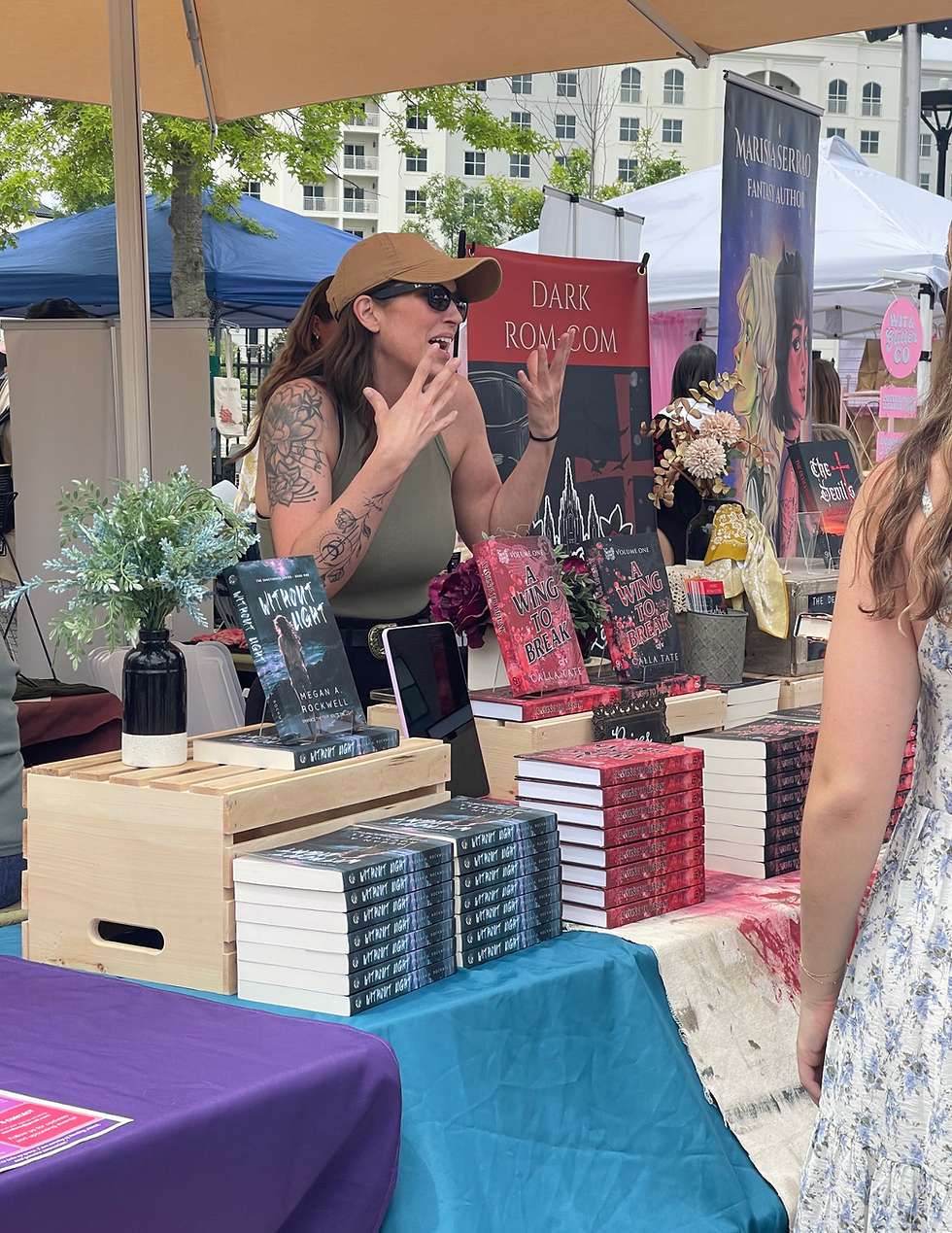
Over the last year I've participated in roughly 10 to 15 events, and they've become my favorite part of this entire adventure. Nothing compares to meeting readers in person.
On top of that, spending a day surrounded by other authors who understand exactly what this journey feels like is also an amazing experience. I think of them as my co-workers, as I currently have none. Aside from my pint-sized snack army of course.
The internet is wonderful and I’ve made so many meaningful book related connections, but real conversations across a table are still my favorite form of marketing.
If you ever see me at an event, please stop and say hello.
The Financial Reality
This is the part everyone is usually curious about.
No, I haven't gotten rich doing this. Not even close.
By the end of 2026, I expect my publishing expenses for the year to land somewhere around $15,000. Not bad for publishing four books (Don’t forget I do a lot on my own). I’m also conservative with what I spend and a staunch budgeter.
That $15k number is before accounting for the expenses I'm still carrying from 2024 and 2025. Significantly less, but certainly not nothing.
Building a catalog costs money
Editing costs money
Inventory costs money
Events cost money
Marketing costs money
… I think you get where I’m going here.
This year has very much been my "if you build it, they will come" year. The goal wasn't immediate profit. The goal was building the foundation.
The good news is that foundations eventually stop being foundations. At some point they become structures. I have made a good chunk of money this year, that has chomped its way through those expenses I'm chasing.
Based on my projections, by the end of 2027 I should finally reach my break-even point.
And after that, I expect the business side of this journey to become profitable.
But don’t get crazy. Profitable doesn't mean wealthy. It also doesn't mean bestseller lists or luxury vacations. It simply means the business supports itself and contributes to my family's life rather than taking from it.
For me, that's always been enough. Every writer's situation is different.
What's Next?
I plan to continue this experiment through at least December 2026.
In 2027, my goal is intentionally different. Instead of publishing multiple books, I plan to release only one: the third Ruin's End novel. The third book in the Sanctioned Series will be written, but I would love to take my time with it and project an early 2028 release.
The reason for this slow down is simple.
I want time to harvest what I've planted. To promote the books already available. To attend more events. To find and meet the readers these books need.
I want the catalog I’ve spent this year growing to succeed.
I'll still be writing. Writers write.
But from a publishing perspective, 2027 will be about growth rather than expansion.
Was It Worth It?
Absolutely.
Not because I've made a fortune.
I haven't.
Not because it's easy.
Oh it wasn’t.
Not because success is guaranteed.
That sure as shit isn't.
It was worth it because for the first time in my professional life, every hour I spent working moved me toward something I genuinely wanted to build.
And maybe that's the entire point of why I make such huge changes in my life.
A year ago I decided to find out what would happen if I gave writing my full attention.
The answer is four books, countless lessons, a lot of long days, some very nervous financial decisions, wonderful readers, incredible fellow authors, and the growing belief that this crazy little business might actually work.
Did I miss anything? What burning questions do you still have about this expirement? I'd love to hear your thoughts or if you've had a shared experience as a writer. Have you ever been able to do something like this or is this a goal on your radar?
I'd love to connect with you here or through social media IG: @megan.a.rockwell or @callatatebooks


Comments